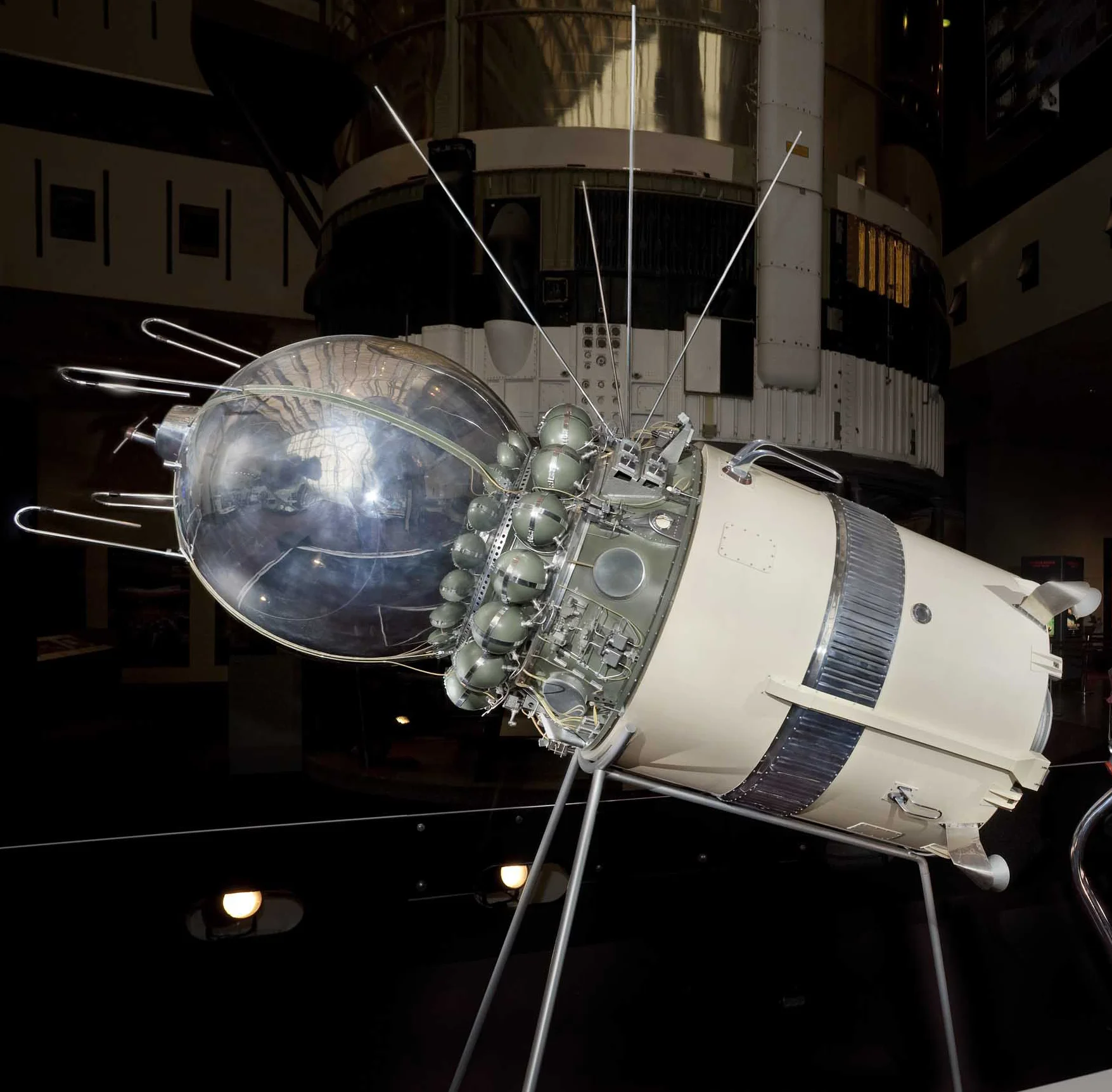
Yuri Gagarin became the first man in space, with Alan Shepard soon following. The spacecraft that carried them had little in the way of long-term provisions, as lifesupport systems only needed to support a single man for an orbit or two. As the ambitions to land on the moon were the foundation of both of these pioneer's first flights; the need for larger spacecraft with more robust lifesupport systems were already on the drawing board while Vostok 1 and Freedom 7 circled earth.
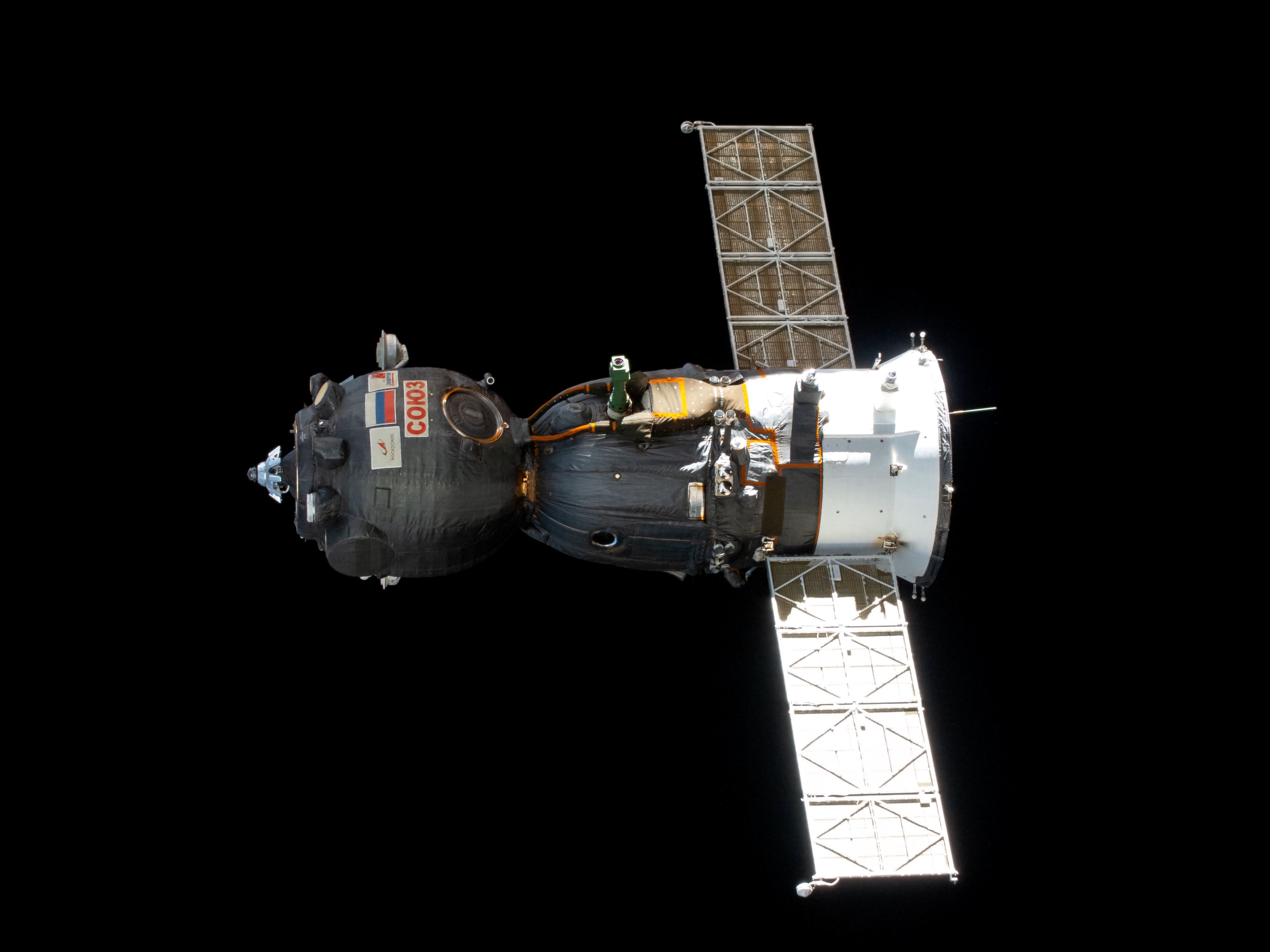
As each space program developed, the approaches couldn't be more different. The Soviets turned away from Vostok and towards an innovative three-segment craft design, called the Soyuz. This craft (due to constraints with the size of rail-transported Soviet launch vehicles) spread its systems lengthwise and split the crew between two modules stacked on top of each other. The spherical orbital module contained sleeping quarters, docking hardware, and living room; while the descent module had heatshielding, parachutes, and molded seats for "rough" re-entry profiles.
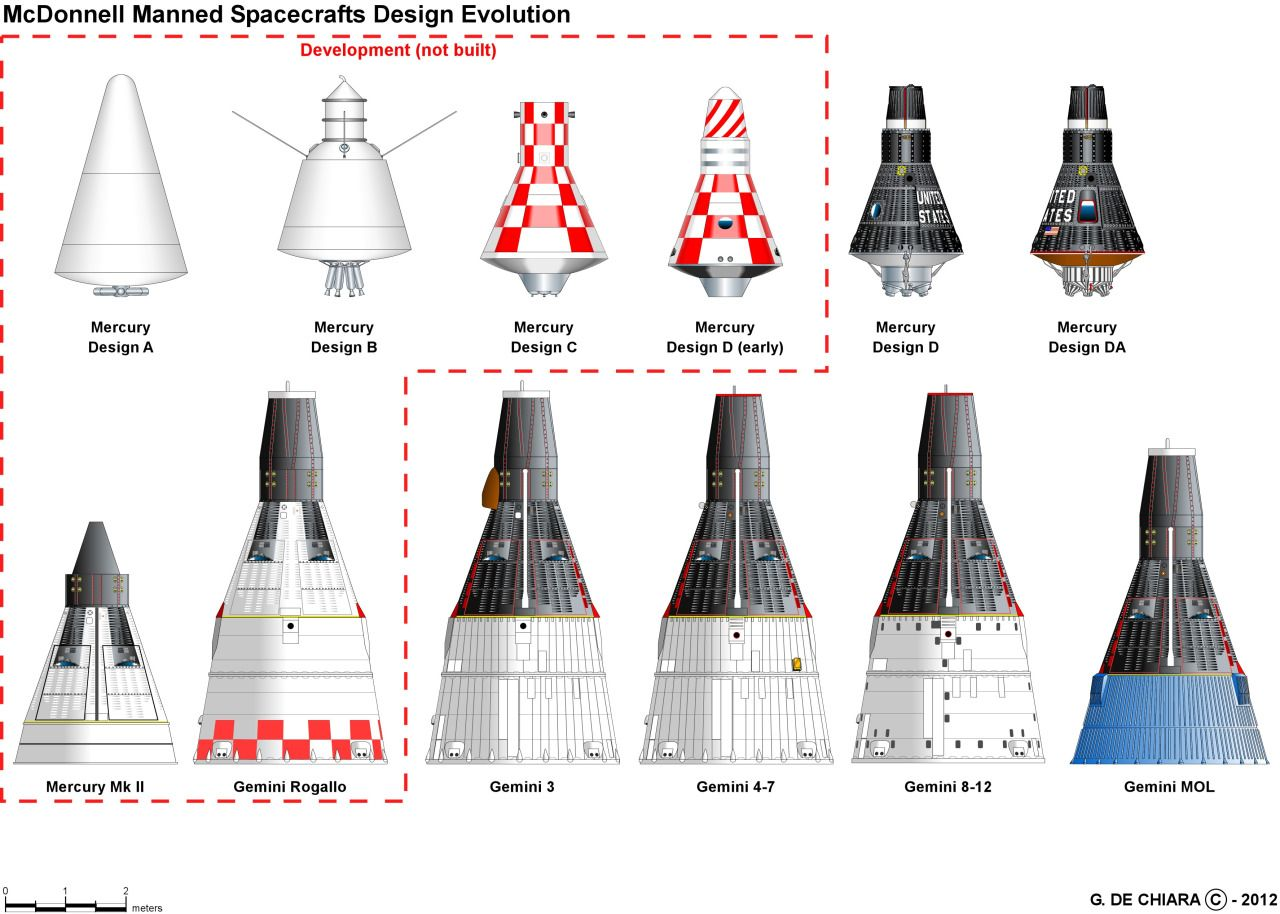
NASA took a two-pronged approach for the successor of the Mercury spacecraft. They first designed a larger shingled two-person capsule called Gemini with the goal to use its forward-facing windows to practice and perfect rendezvous and docking; with the entire craft having the endurance to stay in orbit for up to two weeks (Gemini 7). As these flights were progressing, the Apollo spacecraft was being designed in tandem with the learnings from Gemini. It housed a third astronaut, had much more robust systems, better living space, and a more modern design.
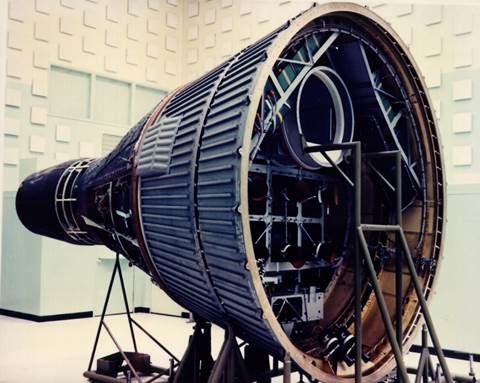
All three of these next-generation machines were supported by cylindrical service modules that housed oxygen tanks, hydrogen tanks, solar panels, fuel cells, RCS systems, radiators, and a variety of electronic systems to regulate the environment and control the spacecraft. To ensure controlled re-entry, they were all designed to attach behind the re-entry module and decouple before the atmosphere was hit.
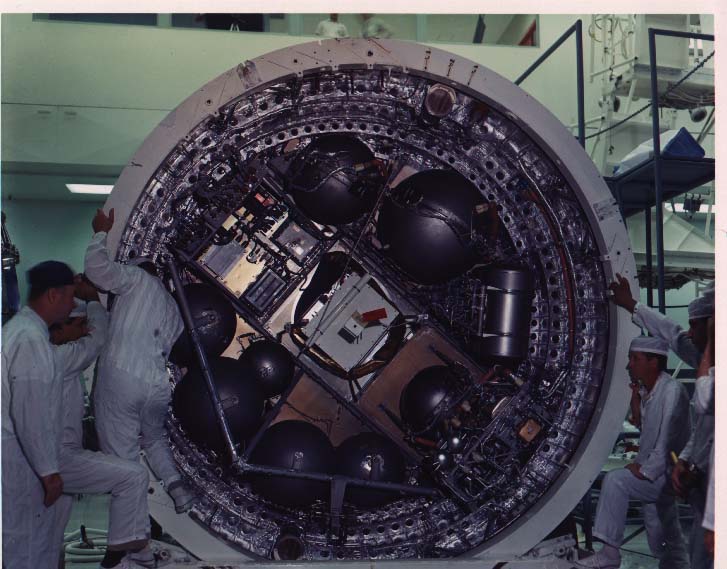
As time passed and mission profiles changed, so did these craft and service modules. Gemini was pitched to evolve into a crewed space station shuttle for the US Airforce (as an alternative to being retired for Apollo), with its service module gaining crew transfer tunnels to enable internal access to orbital laboratories mounted behind the SM. Apollo served a short stint as a rescue craft for Skylab, with half of its fuel cells stripped out. The Soyuz craft evolved in a variety of ways, all retaining the iconic three-piece design, and becoming a workhorse for supporting the International Space Station.
These early stages of crewed spaceflight and the complexity of managing their systems is what drew me into playing Kerbal Space Program. Feeling like this specific angle of craft design was under represented, I began creating a service bay system that mirrored the same approach these pioneering craft have. The grand scope-creep that was Universal Storage covered both Soviet and NASA designs, with a variety of size-adjustable service bays that could open and close in a variety of different ways. Each bay could be filled with a grab-bag of different parts suited for lifesupport, electrical or propulsion systems, tailored to the mission at hand. Each socket was standardized and even provided a base for other mods to plug into (Dmagic Orbital Science) with configuration files (thanks to my co-author Paul) that allowed the mod to identify what lifesupport system it was installed alongside, and adapt itself to it.
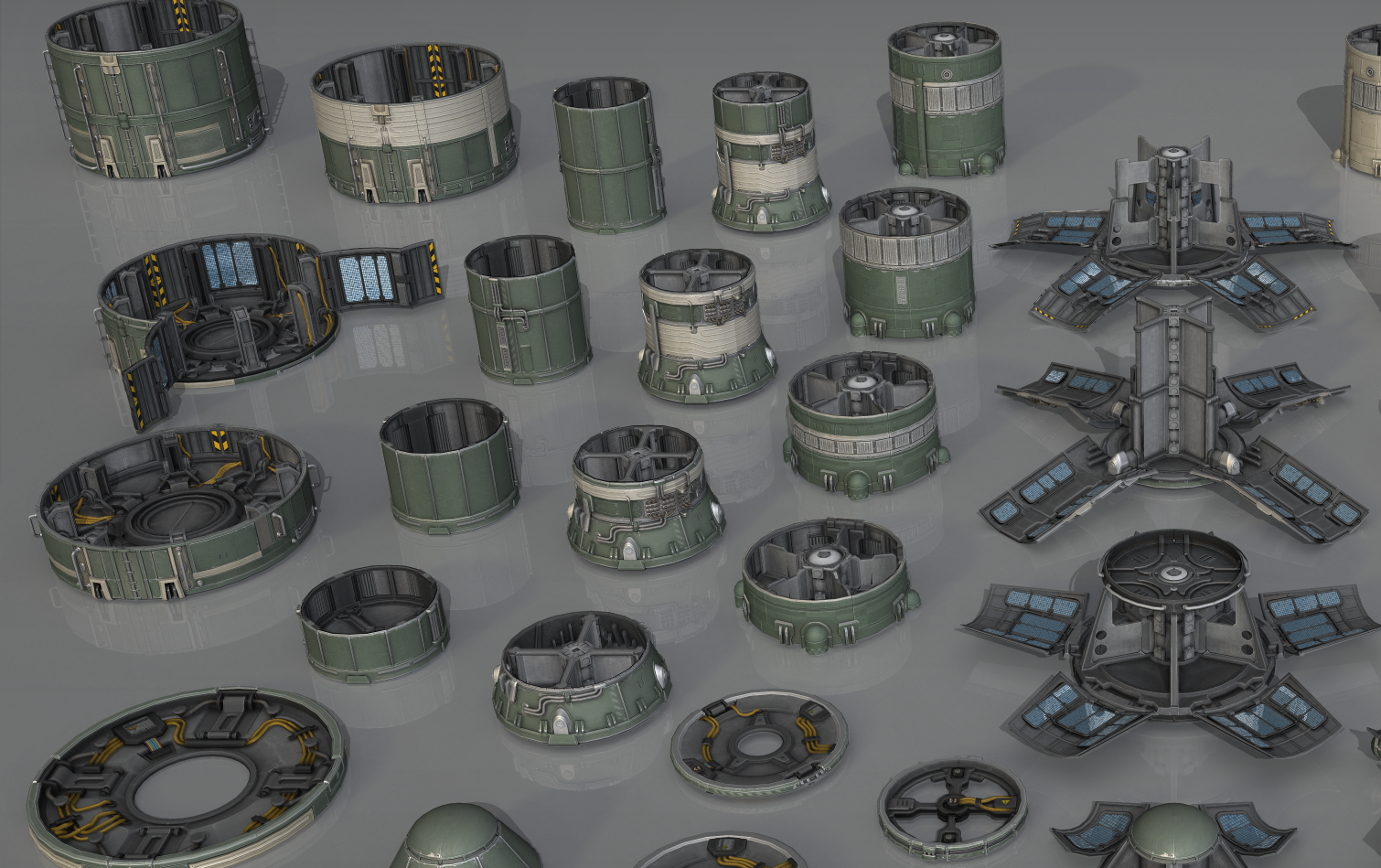
All up, it was a huge amount of work I am still extremely proud of; and its DNA lives on within Kitten Space Agency.
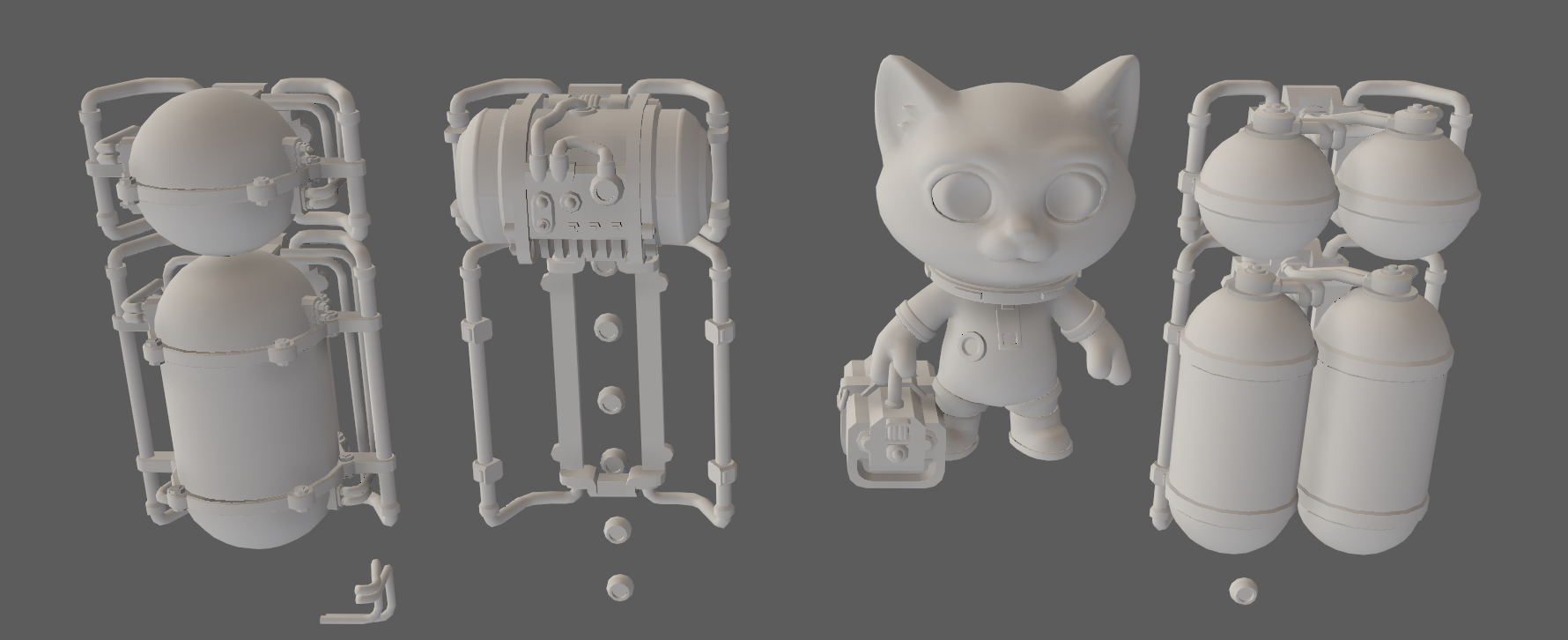
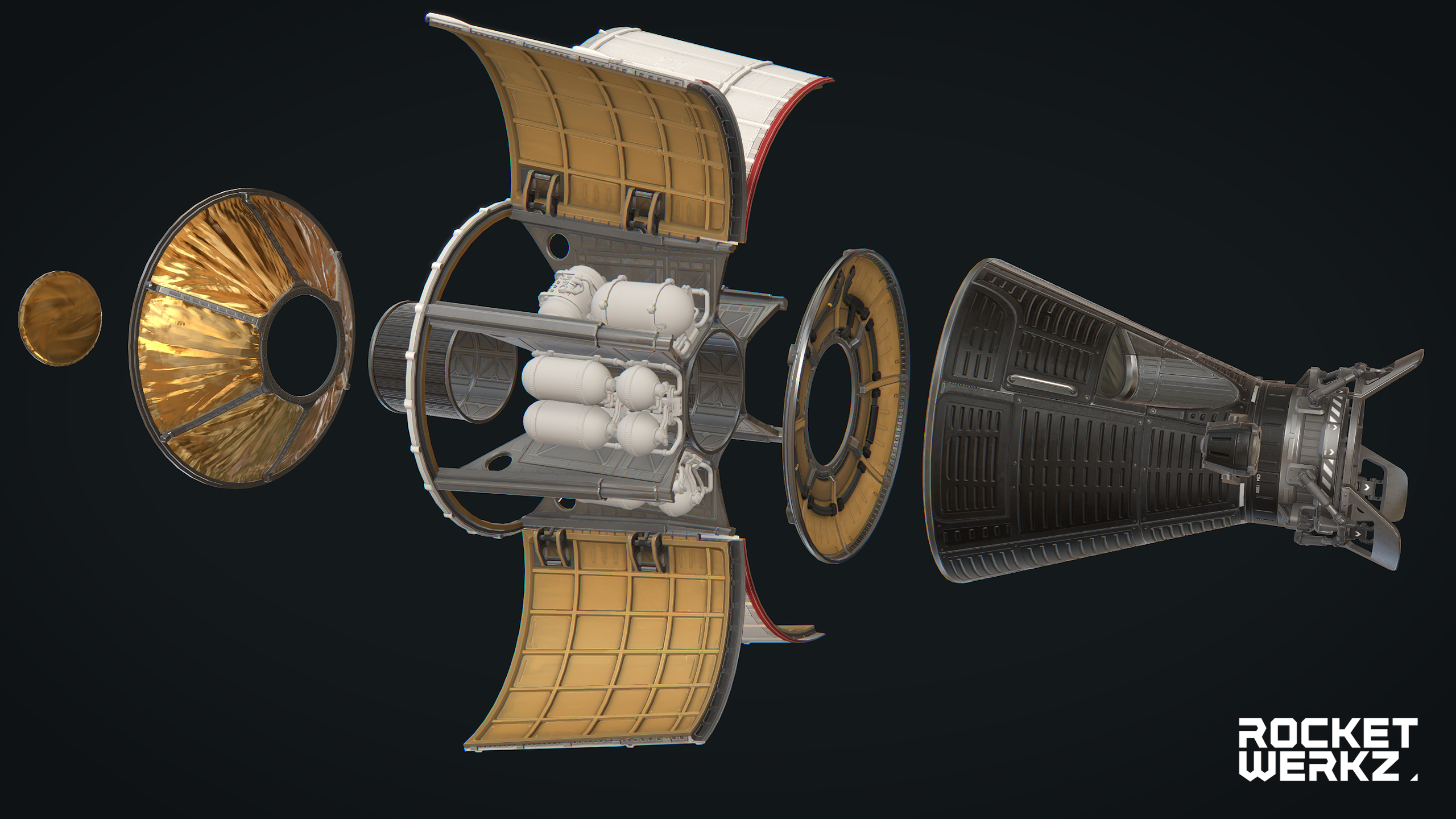
And we have come full circle to where I started :) My latest focus has been a true subpart optimised overhaul of the current service module to one that is both animated, instanced, adjustable and socketed for a similar array of Universal Storage bay parts to fit inside. The original part was made well before I understood the system Brutal was using, and compromised of a monolithic block of merged mesh that couldn't be used for anything else.
Compare that to...
Instanced common interface sockets and plates, to interface with common baypart frames
A standardized 3m -> 1m mylar\kapton truss with a small removable cover to enable crew passage
A standardized socket for 2.5m -> 3m heatsheilds
A set of common structural tubes that extend as the base service module lengthens, sized for hatches and kitten shenanigans
A core structure that is radially mirrored every 60 degrees, and instanced to allow for better performance.
Four variants that all terminate at a 3m diameter, giving you the option to stack bay parts to suit the mission at hand (up to four units high).
Once the rest of the bay parts are done, these will all mesh together and provide the first initial baseline of life support to keep your kittens cosy, well fed, and prepared for whatever mysteries their universe will throw at them.
Don't forget to pack the tuna!